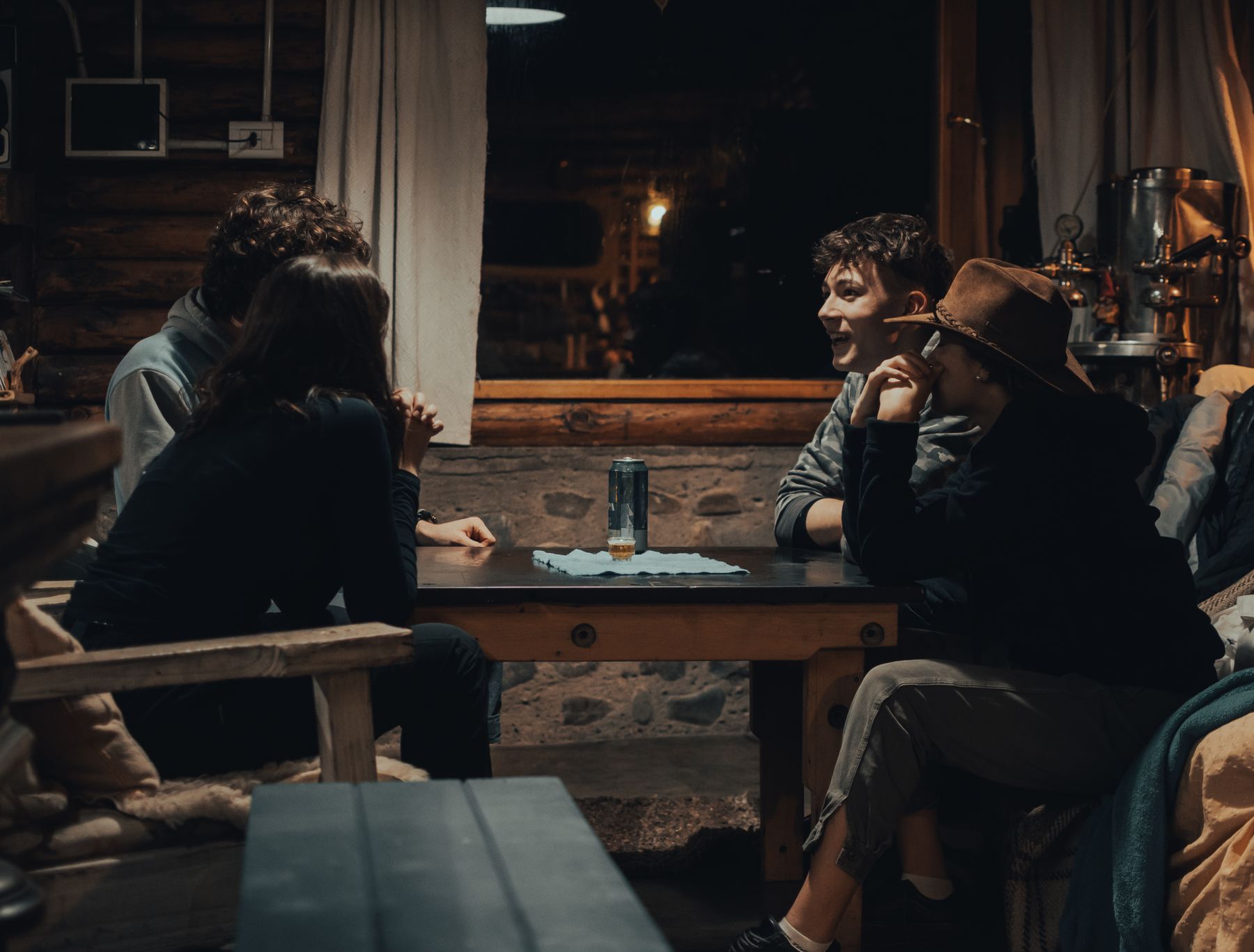
A simplicity circle is a small group — usually six to twelve people — that meets regularly to talk honestly about living more simply: money, possessions, time, work and community. It has no leader or expert; members take turns facilitating, listen to one another and support each other’s changes.
Origin: Cecile Andrews, Seattle, early 1990s; described in her book The Circle of Simplicity (1997). Format: 6–12 people, weekly or fortnightly, 90 minutes to 2 hours, a theme and questions each time. Free, peer-led, no expert. Our six-week course gives a ready-made structure.
Where simplicity circles come from
The format was developed by American educator Cecile Andrews, who began running small discussion groups on voluntary simplicity in Seattle in the early 1990s. Inspired by study circles — a tradition of adult education strong in Sweden — the groups spread across North America and beyond. Andrews described the method in The Circle of Simplicity: Return to the Good Life (1997). The idea was simple: changing one’s life against the current of consumer culture is much easier with company.
Why a circle helps
- Support: friends, family and advertising often push the other way; a circle pushes with you.
- Accountability: saying aloud what you intend to change makes it more likely you will.
- Ideas: members share practical solutions that no book contains.
- Community: many circles become lasting friendships, which is itself a form of richness.
How a session works
| Time | Part of the session | What happens |
|---|---|---|
| 10 min | Arrival and check-in | Each person says briefly how they are and what changed since last time |
| 10 min | Reading | A short text on the theme, read aloud or prepared in advance |
| 50–60 min | Conversation | Two or three open questions, everyone speaks in turn before open discussion |
| 15 min | Practical commitment | Each person names one small action for the coming week |
| 5 min | Close | Choose next facilitator and theme |
Ground rules that keep circles healthy
- Speak from your own experience; no lecturing or advice unless asked.
- Listen without interrupting; give everyone time to speak.
- What is said in the circle stays in the circle.
- No selling, recruiting or promoting products or causes.
- Rotate facilitation so no one becomes the “leader”.
How to start a simplicity circle
- Find three or four people — friends, neighbours, colleagues, a faith community or a local notice board.
- Choose a place — a living room, library room or café back room. Homes work well.
- Agree a rhythm — weekly for six weeks is a good first commitment.
- Pick themes — enough, things, money, time, earth, community. Our six-week course provides readings and questions.
- Hold the first meeting — explain the format, agree the ground rules and start.
- Review after six weeks — decide whether to continue, change themes or welcome new members.
Themes and questions to get started
| Theme | Example questions |
|---|---|
| Enough | When did you last feel you had enough? What made it so? |
| Things | Which object would you save in a fire? Which would you not miss? |
| Money | What do you spend on that does not reflect your values? |
| Time | If you had one more free day a week, how would you use it? |
| Earth | Which of your habits would you most like to change for the planet? |
| Together | Who in your life supports a simpler way of living? |
A sample first session
| Time | What happens |
|---|---|
| 0:00–0:10 | Arrival, tea, a minute of quiet to settle |
| 0:10–0:30 | Round of introductions: “What brought you here?” Each person speaks once, without interruption. |
| 0:30–1:15 | Discussion of the session’s theme, guided by two or three open questions |
| 1:15–1:30 | Each person names one small change to try before the next meeting |
| 1:30 | Agree the date, the next theme and who hosts |
Tips for facilitators
- Rotate the role. A circle is not a class. Sharing facilitation keeps it balanced and stops one person from becoming the expert.
- Use a talking piece. A stone or any small object passed around slows the conversation and gives quieter members room.
- Keep time gently. A visible clock and an agreed end time make people more willing to come back.
- Ask rather than tell. “What has worked for you?” goes further than advice.
- Welcome disagreement. People simplify for very different reasons, environmental, financial or spiritual, and the circle is richer for it.
Online circles
Video calls make it possible to form a circle with people in different towns. Keep groups smaller, four to six people, so everyone has time to speak. Hold sessions to an hour, ask everyone to keep their camera on if they can, and use the same simple structure: a check-in round, a theme, a commitment. Some circles alternate between online meetings and an occasional meal together.
When a circle runs its course
Many circles meet for a set number of sessions, often eight to ten, and then decide together whether to continue. Ending is not failure. It is often the moment when members have absorbed what they came for. Close with a last round: what has changed for each person, and what they want to keep. Some members go on to start a new circle of their own, which is how the idea has spread.
Ten themes for a season of meetings
| Session | Theme | Opening question |
|---|---|---|
| 1 | Why simplicity? | What feels too full in your life right now? |
| 2 | Enough | When did you last feel you had enough? |
| 3 | Time | Where does your week go, honestly? |
| 4 | Money | What purchase brought you lasting joy, and which one didn’t? |
| 5 | Things | What would you save in a fire, apart from people? |
| 6 | Food | What does a simple, good meal look like for you? |
| 7 | Screens | What would you do with one screen-free evening a week? |
| 8 | Work | How much is enough income, and what does it cost you? |
| 9 | Community | Who could you share, borrow or swap with? |
| 10 | Looking back | What has changed since the first session? |
Members can take turns choosing a short reading for each theme, such as a page from Thoreau, an article or a personal story, to send round a few days before.
Frequently asked questions
What is a simplicity circle?
A small, peer-led group of six to twelve people who meet regularly to talk about living more simply and support each other’s changes.
Who started simplicity circles?
Educator Cecile Andrews, in Seattle in the early 1990s. She described the method in The Circle of Simplicity (1997).
Do I need an expert to run a circle?
No. Circles are peer-led; members take turns facilitating with a theme and a few questions.
How often do simplicity circles meet?
Usually weekly or fortnightly, for 90 minutes to two hours. Six sessions is a good first commitment.
Can a simplicity circle meet online?
Yes, although many people find in-person meetings build stronger trust and friendship.